Thursday, 16 June 2022

Spring into Summer


Common Crane (c) JR

Spring has rather passed me by this year in terms of keeping a regularly updated blog. This is by way of a catch-up and some rather random jottings and pictures.

Bittern (c) Bark
The weather has generally been helpful to our wildlife without any late unexpected sharp frosts and there has been sufficient rainfall to keep things fresh green and growing. The rain has also topped up the water levels in the scrapes and ditches as well as keeping the ground softer for birds that probe for their food like Curlew and Snipe.
Common Tern (c) Bark

It has at times been very windy but that seems not to have had many adverse effects on the spring migration.

Crane family (c) Bark

The Ashgrave Cranes have been the great story this Spring. It has been very exciting to have a pair of Cranes with two chicks in tow walking about and feeding in the open on Ashgrave in front of the hide. Sometimes they are huge distances away but can come quite close, much to the delight of visitors. As I write this the chicks are almost nine weeks out of the egg and are looking strong and healthy as they lose their ginger down and start to fledge up properly.


Cranes (c) JR

It was possible to see the parent birds attentively feeding the chicks early on and now it is obvious that they are foraging for themselves and judging by their steady growth finding lots to eat. They still stay close to the parents and as the grass has got longer often disappear from view completely. In fact, the parents themselves often cannot be seen at all but their heads appearing just above the grass will eventually give away their location.

"Ted" and his partner (c) Bark

There are another pair of Cranes present on the moor and they can often be seen feeding out on Noke Sides or flying over Greenaways and the fields beyond. Their breeding attempt sadly failed this year.  They can often be heard bugling as they fly, and the male “Ted” is easy to identify as he is much larger than his companion. Although the birds spend the entire winter in large flocks on the Somerset Levels, they are very territorial when breeding and very vocal should one pair venture into the range of another.

Newly fledged Reed Bunting (c) Bark

There have been frequent visits from all three Egret species with Little Egrets being the most frequently seen. Little Egrets tend not to be around so much in the spring and early summer, and we have speculated that they may be breeding nearby. Cattle Egrets are breeding at Blenheim and just as last year we expect that they will be seen more frequently as the summer wears on out on the fields around the grazing livestock.


Carpark Garden Warbler (c) Bark

All the warblers arrived on cue and there were probably three or four reeling Grasshopper Warblers across the moor.

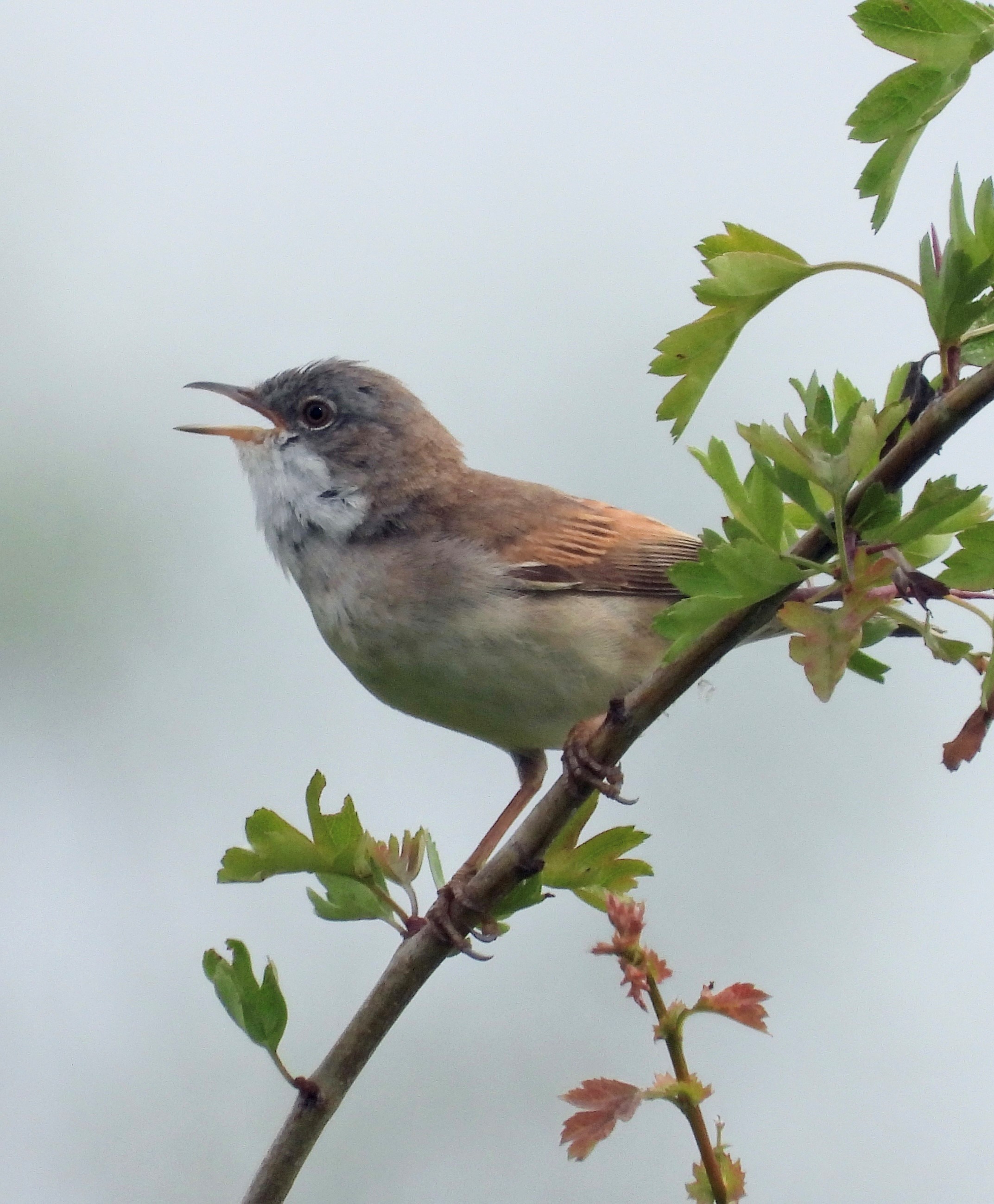
Cetti's above (c) JR and Common Whitethroat below (c) Darrell Woods

There is a very persistent and showy Garden warbler in the car park field. It has a very complex and beautiful song and hearing it one can appreciate why they are sometimes referred to as “ a poor man’s nightingale”.


Showy Sedgie (c) Bark

Every year we seem to have one extremely confiding and dynamic Sedge Warbler somewhere along the bridleway. This year has been no different and a male Sedgie has entertained us all and become the subject of hundreds of photographs. The energy expended by the bird, in its furious and demented song culminating in a parachute descent, is enormous. It has looked stunning, especially when singing among the dog roses.
Gropper Reeling (c) Bark

Cuckoos on Otmoor seem to be bucking the national downward trend. Last weekend (12th June) we saw at least six birds together chasing and calling, flying between the oak trees on the bridleway, the permissive path and the trees behind the first screen.


Top picture (c) Tom NL others (c) Bark

It may be our healthy population of Reed Warblers that attract them and sustain their population.
Reed warbler (c) Bark

For the third year running we have singing Corn Buntings on the moor and are hopeful that they will breed again successfully this year.

Corn Buntings (c) Bark

Female Bitterns are undertaking feeding flights and can often be seen across Greenaways, the males take no active part in raising the young.
Bittern coming in with food (c) Bark

There have been some more unusual sightings this spring including a Spoonbill that spent a number of days on and around the moor. It often seemed to disappear as it fed along the ditches with its head down.

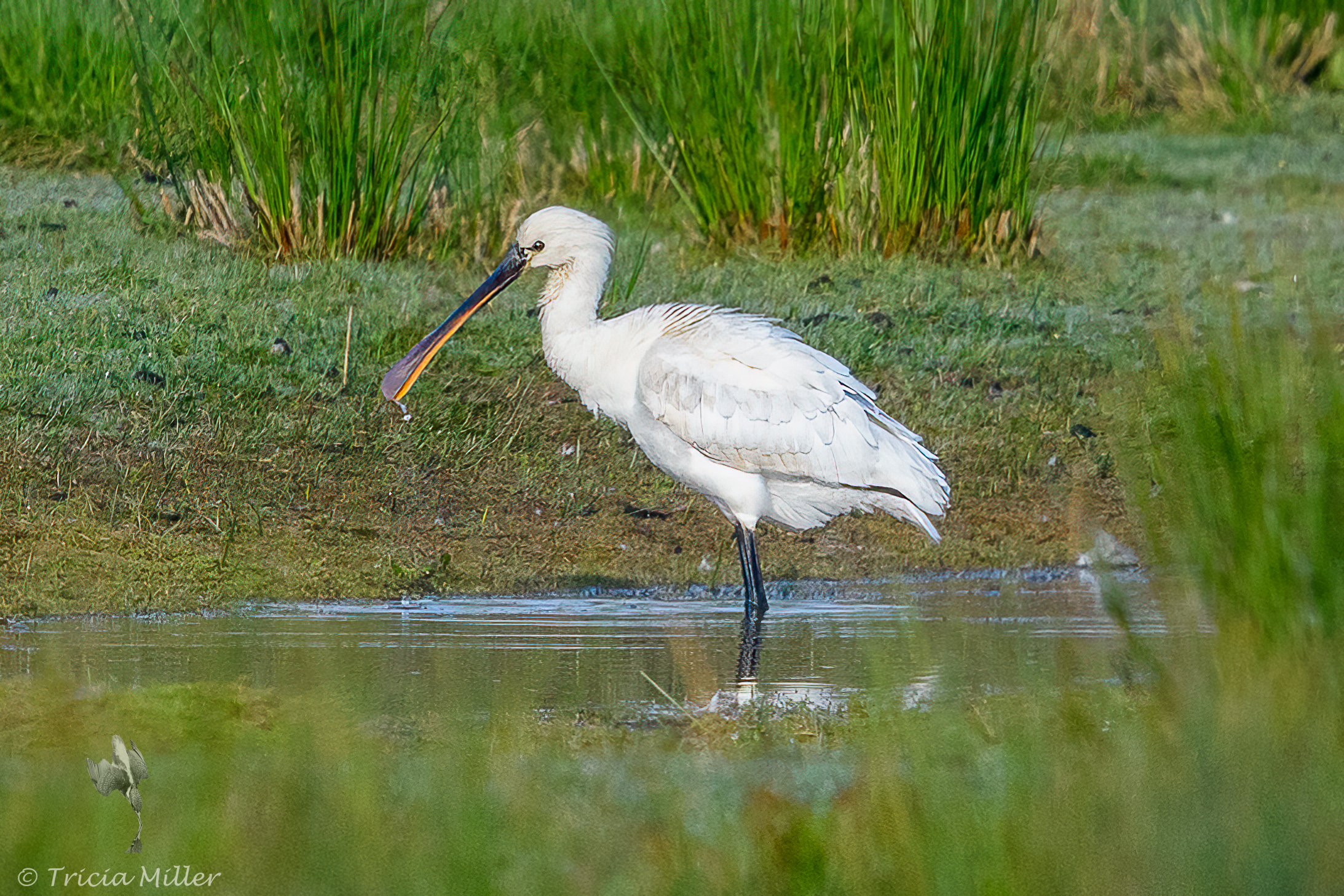
Spoonbill (c) Dan and Trish Miller

An Osprey flew over the reserve just last week but did not tarry. A Tawny Owl was seen and photographed in a tree close to the hide.

Male Marsh Harrier hunting over Greenaway's (c) Bark

Marsh Harriers have been ever present and on Sunday the first of this year’s progeny was seen perched on top of a bush eating a prey item supplied by one of the parents. There was a strong passage of Hobbies earlier in May with over twenty being seen across Greenaway’s on one evening. There are still several about that can be seen hunting dragonflies, usually from mid-morning onwards.
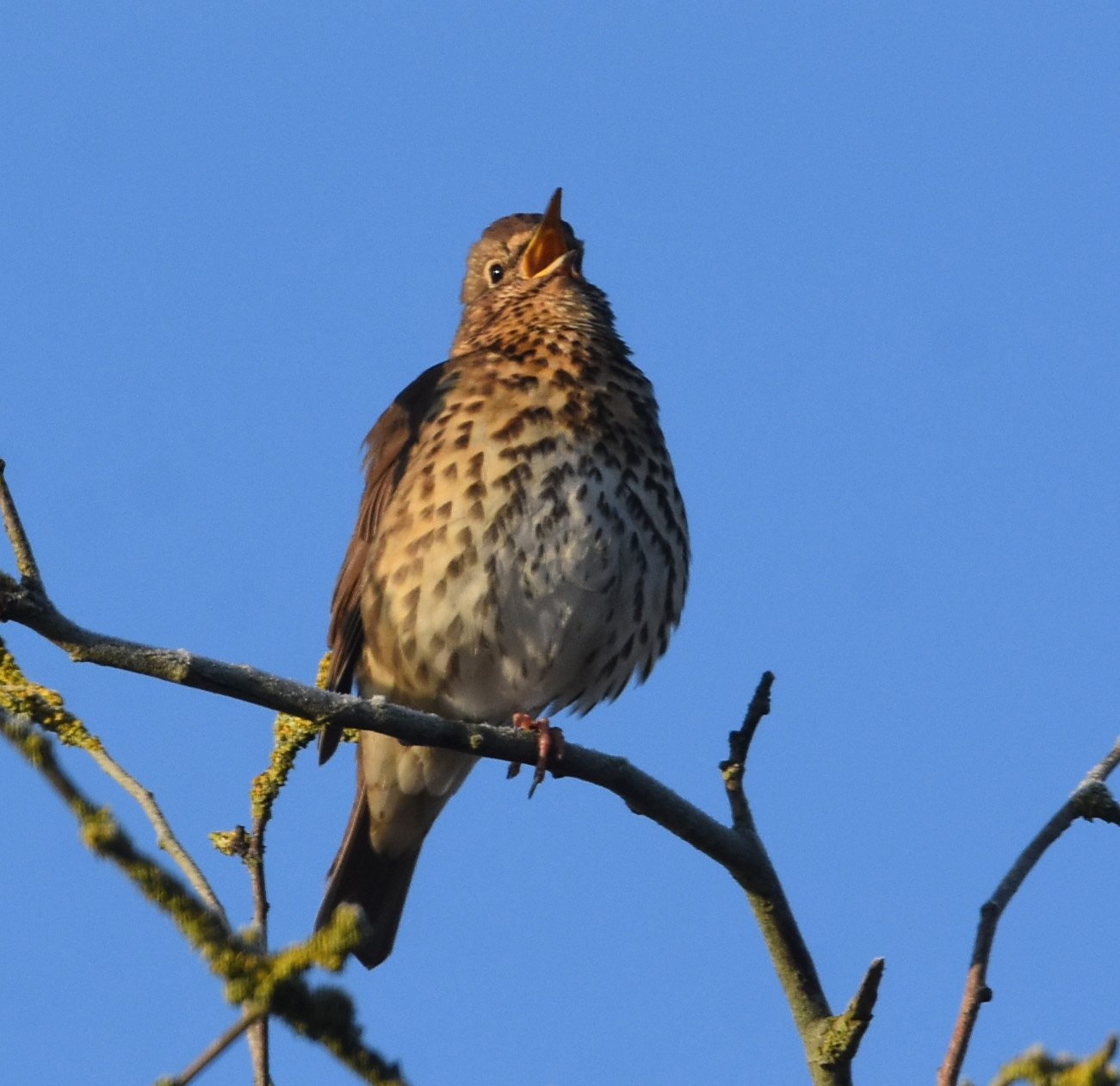
Songthrush by the first screen (c) Bark

Snipe are still drumming and there seem to more pairs present this year, they are displaying over Greenaways and Closes.

Curlew (c) Bark

There are still active Curlew nests across the moor, the practice of putting low electric fences around them once they have been found deters mammalian predators from taking the eggs. There is however a flock of Curlew present that is probably composed of birds that have been unsuccessful in breeding this year. We were treated to a very close encounter with a pair of Redshanks that were moving their clutch of five chicks from Greenaways across the bridle way to Closes.


Adult and chick Redshanks (c) Bark

The birds called and flew close and low over our heads in a distraction display while five chicks with absurdly large feet tottered across the path and disappeared again into the long grass.


Male Bullfinch collecting food (c) Bark

The moor is at its most lush and verdant right now, with dog-roses, brambles and a host of other weeds bursting into flower, and grasses are setting seed.  Birds are gathering food to supply hungry nestlings as the insect population swells.
Common Lizard (c) Bark

 Lizards can be seen basking outside the first screen and there are loopy leverets running down the paths oblivious of to our presence until the very last moment.
Loopy Leveret (c) Bark

It is a wonderful time of year to be out and about on Otmoor.
Dog Rose (c) Bark

Thursday, 19 May 2022

Notmoor ! The last ten days of April in Lesvos


Black-winged Stilt feeding.
Having had to cancel a trip to Lesvos in April 2020 due to the pandemic we finally made it this year between 19th and 29th of April. Previous trips to the island at this time of year have resulted in seeing significant movements of migrant birds and of course the special resident and summer visiting species that the are stars of any birding visit.
Woodchat Shrike

The weather in the Eastern Mediterranean has been a bit unpredictable this year just as it has here, and it has had a significant impact on the pattern of migration.
Glossy Ibis
We did not see migrating birds in the large numbers that we had had on previous occasions. We only saw one Red-footed Falcon, a female, whilst in previous years there had been parties of thirty or forty moving through.
Female Red-footed Falcon

The pools and wetlands beside the entrance to the salt works were dry and there was a much more limited suite of birds to be found there.
Eastern Bonelli's Warbler displaying

We saw only one Montague’s Harrier and no Pallid Harriers on the whole trip, again in stark contrast with previous visits. Ruppell’s Warblers were not present in their regular haunt between Petra and Molivos.

Bee-eaters at the saltpans.

Meladia Valley Little Owl

There have been some changes in places that we have visited in the past, the fords in the Meladia Valley for instance, and they will take some time to re-naturalise and re-vegetate.

Cinerous Bunting Ipsilou Monastery

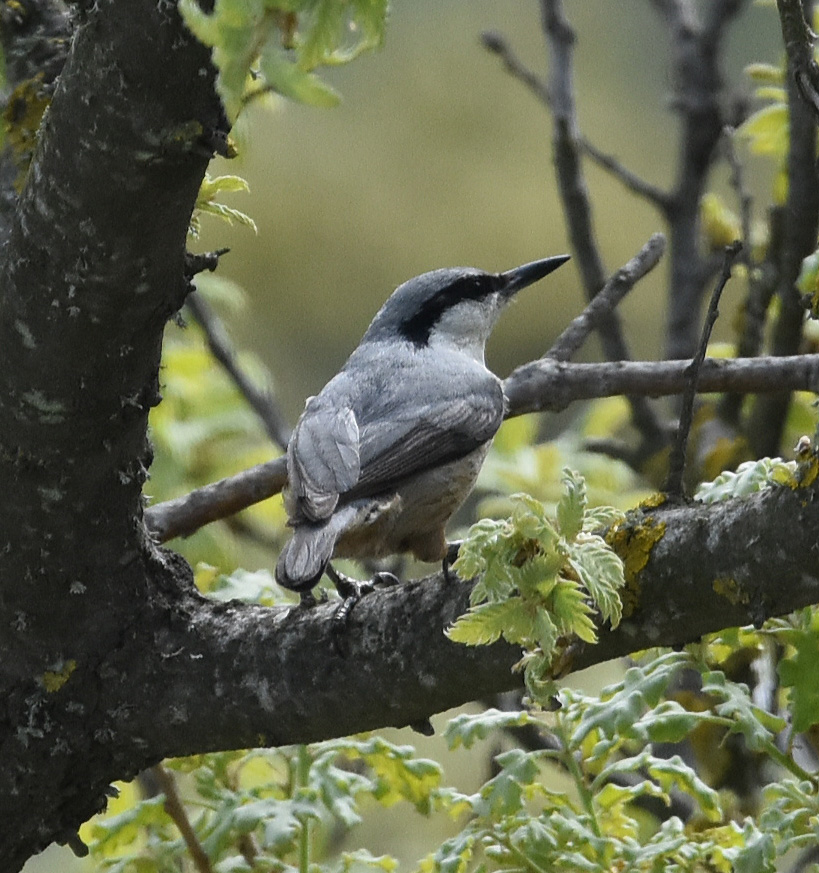
We still found and enjoyed Cinereous and Cretzchmar’s Buntings, found a pair of Kruper’s Nuthatches at a nest hole and had great views of a displaying and singing Eastern Bonnelli’s Warblers.


Kruper's Nuthatch

One of the highlights for me was three displaying Great Spotted Cuckoos at almost point-blank range,
Great spotted Cuckoo

another was the colony of Great Reed warblers near the ford in the Tsiknias River
Great Redd Warbler

and a displaying Chukar Partridge so pumped up that it ignored us!
Chukar Partridge

Another treat in Lesvos are the Nightingales that seem to be singing everywhere and the amazing abundance of Corn Buntings, almost the default bird in farmland.

Nightingale and Corn Bunting

We saw some great things and of course loved the unspoiled nature of the island and its fabulous wildflowers, olive groves and woodlands. The hospitality and warmth of the islanders was as welcoming as it has always been, the Greek Orthodox celebrations in Skala Kalloni were both spectacular and moving. I am quite certain that I will be going back again another year.

Little Stint and Temminck's Stints side by side

Black-headed Wagtail (Yellow Wag ssp.)

Red throated Pipit

Tawny Pipit

Whinchat 

Rock Nuthatch

Spotted Crake

Hoopoe

Thursday, 14 April 2022

End of March and into April

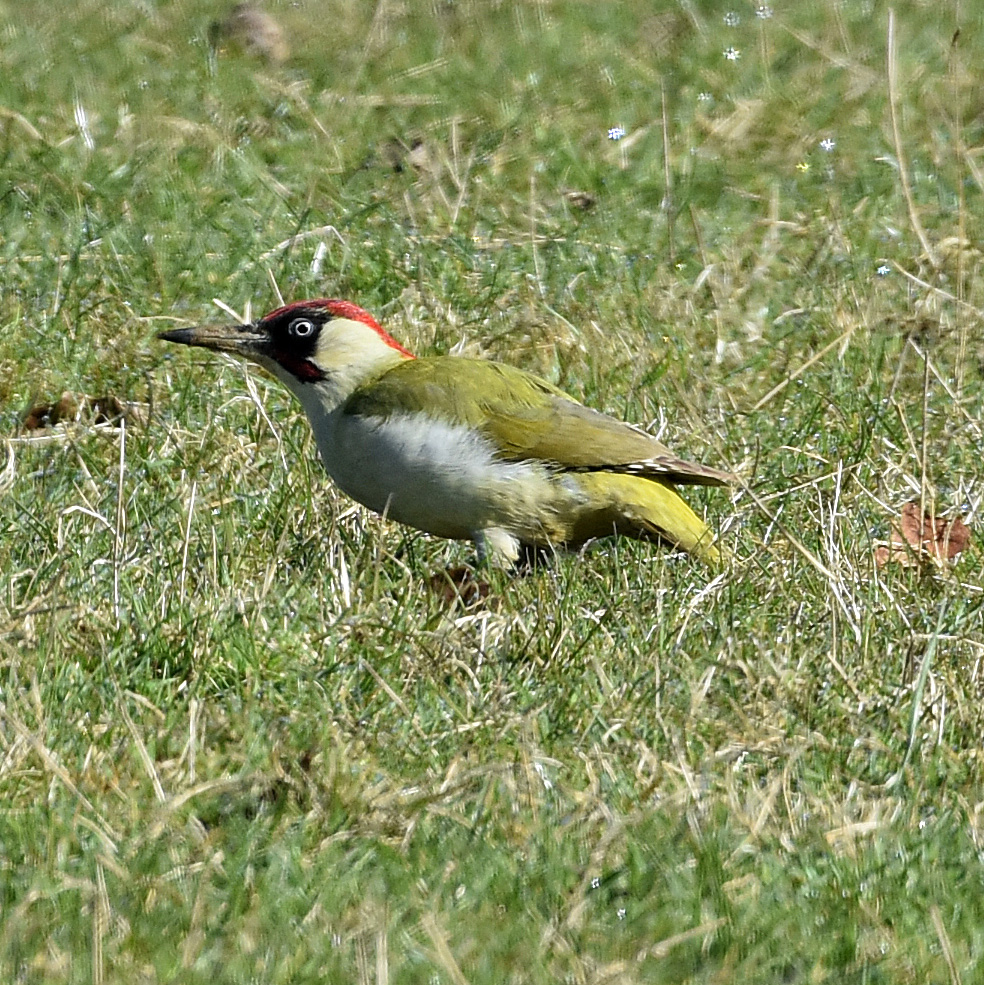
Green Woodpecker on the sheep fields at Noke (c) Bark

The first Willow Warbler has been heard and the first swallow seen. Over the next few weeks, the summer visitors will start to flood in. Some of them will be using the moor as a staging post on their way further north and west , others will remain here to breed. Already the Lapwings, Redshanks and Snipe are calling, courting, mating and sitting on eggs.


Early morning Curlew flyover (c) Bark

Both on and off the reserve Curlew are present in significant numbers and are filling the soundscape with their wild evocative calls.

Big Otmoor is attracting passage waders with up to seventeen Ruff being recorded. They are predominantly males recognised by their markedly larger size and very varied plumage colours. There was one bird we saw last weekend that was so white we had initially thought it was a gull! There have been both ringed and Little ringed Plovers scuttling about on the drying mud and almost disappearing when they have been standing still.

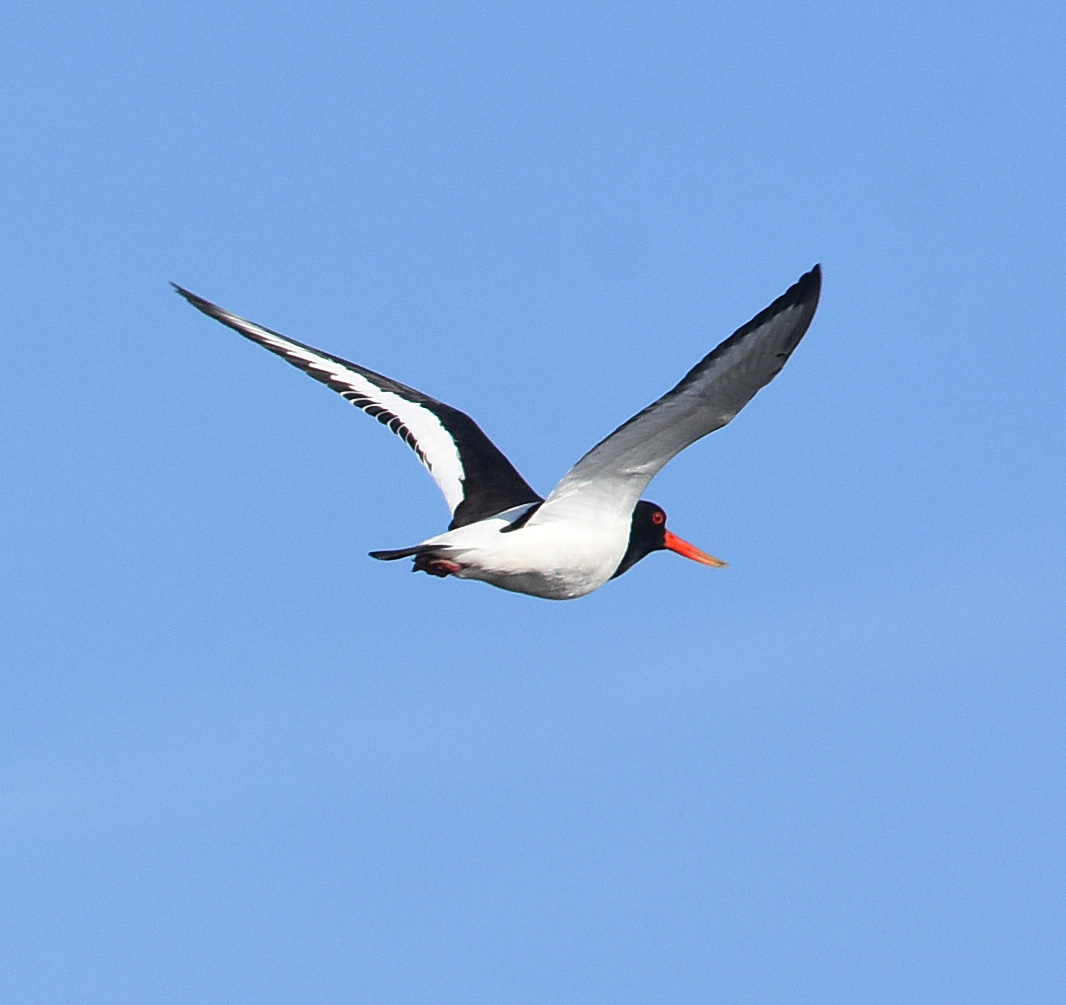
Oystercatcher Big Otmoor (c) Bark

Varying numbers of Dunlin have been stopping over with numbers often in double figures. A small flock of about twelve Golden Plovers are still out in the middle, all of them now having moulted into their striking summer plumage, their number a far cry from the thousands that were here just five or six weeks ago.
Meadow Pipit (c) Bark

There are certainly two, probably three and perhaps as many as four booming Bitterns across the moor. It is very difficult to be certain about precise locations as one has to hear them calling simultaneously, however once booming they tend to become very sedentary. The bird that has been calling out on Greenaways was seen to be displaying to a female on one evening last week. It was stalking around behind her and fluffing out its feathers.

Cetti's Warbler (c) Bark

There is another individual booming on Ashgrave up towards the Noke turn and last weekend a lot of booming was coming from the middle of the northern reedbed. Once the males have attracted a partner and mated, the rest of the nesting and rearing of the young is undertaken entirely by the females.

Geese are sitting all over the reserve, but we are still to see any of the hundreds of goslings that will hatch over the coming weeks.


Pochard Passion (c) Bark

Wildfowl are displaying, courting and mating, the latter part of the process often resulting in a near drowning for the female part of the pair!

Above Great Crested Grebe (c) Tom N-L  and below Little Grebe (c) Bark

There are still some Wigeon grazing out beside the pools and significantly there are still a few Pintail present. We think they bred on the moor last year for the second season running and hope that it will happen again this year.

Garganey pair Big Otmoor (c) Bark

Garganey are back and are displaying. Last summer we were sure that two pairs bred successfully and hope that this year they will succeed once again.


Marsh Harrier Greenaways (c) Bark

All three Egret species have been reported, although there has just been one Cattle Egret seen. They are present regularly on the Cherwell just a few miles away and once we have livestock back out on the fields again, the moor will look more attractive for them.

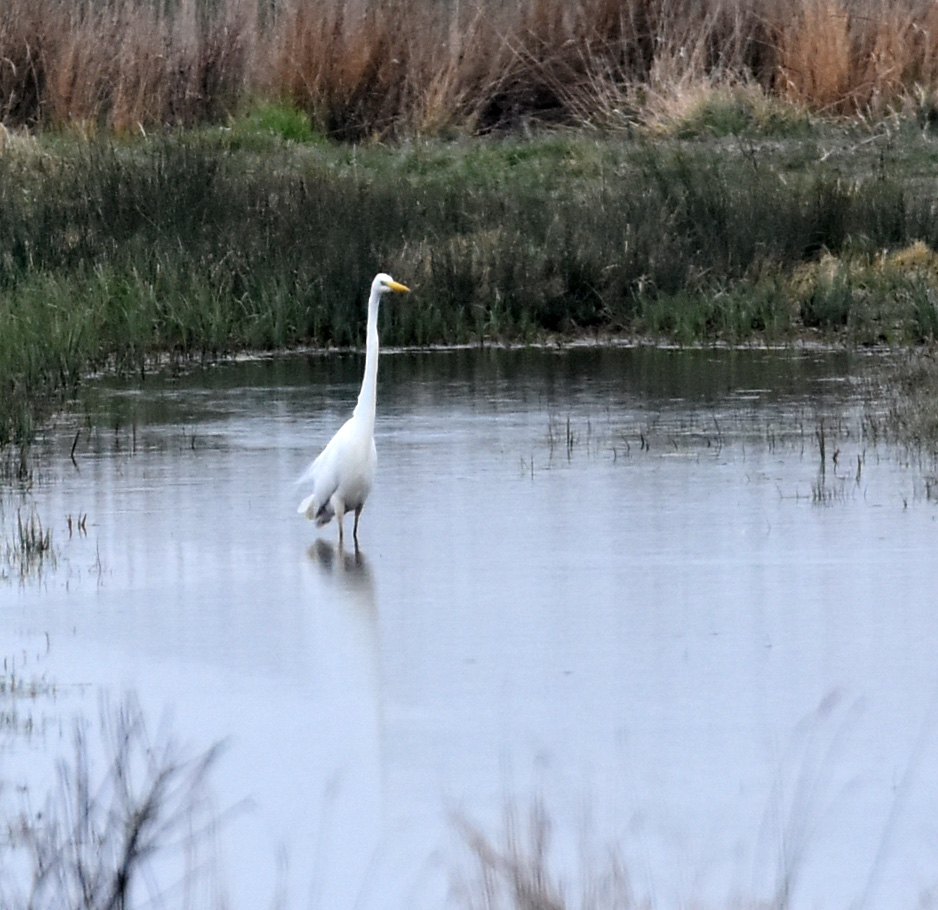
Great White Egret Greenaways (c) Bark

Two Great White Egrets have been seen regularly on and around the reserve. We currently host five or six pairs of Grey Herons that nest in the reedbed and speculate that maybe this will encourage the Great whites to become the next Otmoor breeding species.


Singing Song Thrush (c) Bark

Over the last few weeks each morning as I have arrived there has been a Song Thrush belting out its repetitive song in the early morning sunshine. In the trees and hedgerows Chiffchaffs are continuously feeding whilst giving their onomatopoeic songs.
Chiffchaff (c) Tom N-L

By the end of this month most of the regular summer visitors will have arrived and will be singing and breeding flat out. It will be very interesting to see whether Turtle Doves manage to return, they were barely present for more than a couple of days last summer. Might we find that we are exchanging Turtle Dove for Cattle Egret as a breeding species?
Common Lizard by first screen (c) Bark