Monday, 16 August 2021

First two weeks of August Egrets and Waders

Wood Sandpiper (c) Bark

The water on the southern reedbed has continued to draw down steadily and as it does so is exposing larger areas of mud and reed stubble.
Early morning Blue Tit (c) Bark

This area is acting like a magnet to passing waders and Snipe. Over the last week we have seen Wood, Green and Common Sandpipers picking their way through the reed stubble and out onto the muddy margins.


Wood Sand and Green Sand (c) Bark

There has also  been a handful of Greenshanks through. On Sunday there was a returning Ruff feeding out there, looking very bright and spangly, altogether heavier and more solid than the delicate and refined Wood Sandpiper that it superficially resembles. There are good numbers of Lapwings scattered across the island, moulting, loafing and chattering quietly amongst themselves.

Sipe abve (c) JR below (c) Bark

This weekend there were over fifty Snipe feeding and preening amongst the dead reed stems, as always blending in perfectly. They are so well camouflaged that it might well be that fifty is a serious underestimate. At least two juvenile Water Rails could be seen scuttling in and out of the still growing reeds.
Juvenile Water Rail (c) Bark

They are browner, scruffier and lack the adult bird’s smart clean plumage and bright red beak. Last Saturday a Yellow wagtail was also out there perched up on the dead reeds amongst the Snipe. As the month draws on, we can expect to see more of them feeding around the grazing animals and roosting in the reedbed by night.
Snipe (c) Bark

The recent influx of Cattle Egrets to the county has also been reflected on Otmoor. They have frequently appeared in amongst the grazing cattle on all of the major fields with six seen amongst and over the herd on The Closes last weekend.

Six Cattle Egrets over The Closes (c) Bark

As the cattle lay down two Egrets could be seen standing on their backs like those on Buffalo in the Kruger National Park. Both Little and Cattle Egrets have taken to resting and preening on the mudbanks in front of the first screen where the differences between the two species can really be appreciated.
Serengeti Egrets? (c) JR

The comparison prompted the observation from one eminent birder “ How come they are called Little Egrets when they are so much bigger than Cattle Egrets?” The Cattle Egrets have bred successfully at Blenheim and although it is very late in the season were seen and photographed carrying sticks into the isolated willow tree out from the first screen.
Egrets on Greenaway's (c) Oz

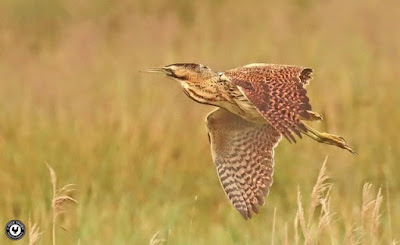
We know, thanks to Terry’s dedicated team of Bittern watchers, that they have fledged chicks from three different nests, although the number of fledged young is not certain. They are being seen frequently, flying around the reserve, feeding out in the ditches and landing in the reedbed, although “landing” is something of a misnomer. Bitterns, especially young ones, tend to crash heavily into the reeds rather than landing in any kind of controlled way!

Bittern (c) Nick Truby

Passage whinchat on Greenaway's (c) Nick Truby

The first returning Whinchat has been seen out on Greenaway’s and there are regular reports of both adult and juvenile Redstarts in the bushes and hedges of Long Meadow.
Juvenile redstart (c) Bark

Mixed flocks of tits and warblers are roaming across the moor and there are still Reed and Sedge Warblers along the ditches and in the reedbed.


Reed and Sedge Warblers (c) Bark

The yearlist has gone up by yet another species when a female mandarin duck was seen at the second screen taking it up to an extraordinary one hundred and sixty-two for the year.
Female Mandarin at the second screen (c) Rob Cadd

Tuesday, 3 August 2021

All through July


Corn Bunting (c) JR

As the waters continue to drain down at the first screen, it has become the current “hotspot” on the moor. There has been a steady stream of returning waders moving through and pausing to refuel. The extensive area of reed stubble from the cutting in the winter of 2019-20 is now proving irresistible to loafing ducks, both juveniles from this year’s clutches and to adults that are now going into moult and eclipse.


Snipe at first screen (c) Bark

As is to be expected there are now significant numbers of Snipe in amongst the short brown reed-stems, they melt into their surroundings perfectly, their camouflage so much more effective than anything we might come up with! They are prone to taking sudden flight and when they do there always seem to be more of them as they flush than we had thought were there!
Blackwits (c) Darrell Woods

Black-tailed Godwits have been visiting, still resplendent in their smart brick-red summer plumage. Wood Sandpipers have been seen regularly, both here and out on the edges of the Big Otmoor scrapes, we have recorded this scarcer wader more often this year than for many years. Common and Green Sandpipers have also dropped in from time to time, picking their way delicately through the dead reeds and around the legs of the loafing ducks.


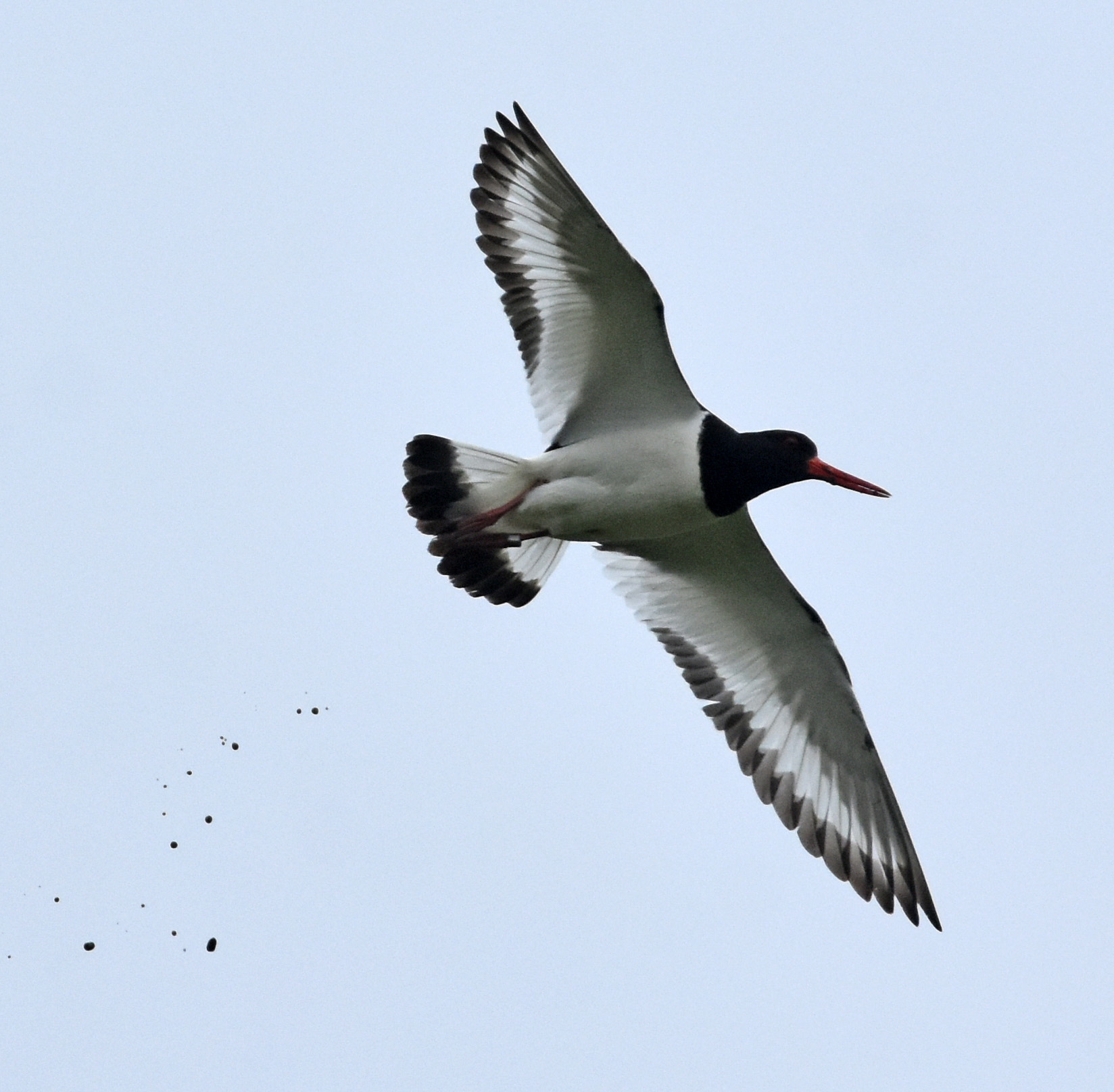
Oystercatchers      Above (c) JR     below (c) Bark

A family party of Oystercatchers flew into the island with two adults and four juveniles. The juveniles are distinctive in having bills that are less uniformly red and having browner rather than jet black backs. They were joined by another adult before flying off together onto Big Otmoor. We assumed that these are the birds that have bred out on Big Otmoor this year.
Juvenile Oystercatcher flying in (c) JR

All three Egret species have been seen out from the first screen. Little Egrets have predominated with a peak count of around twenty there in mid-month. They must have been finding plenty to eat in the way of small fish as the shoals of small fry and larger Rudd can be seen clearly in the shallow waters in front of the screen.


Young Heron with breakfast and interested Egrets above (c) Bark

Evidence that there are some larger fish out there could be confirmed, when a young hunting Grey Heron speared a fish out near the island. Its prey was much longer than its head and had to be taken over to dry land to be finally dispatched and swallowed, with a struggle. This attracted what looked like an admiring crowd of Little Egrets that were obviously hoping to steal or share the meal, but all of them far too small to cope with such a catch.
Cattle Egret in oak tree behind first screen (c) JR

At the second screen the Common Terns have completed their breeding cycle and there were just two chick free adults sitting out on the raft last Sunday. It seems to be a very rapid turnaround from incubation to fully fledged and flying youngsters. The high energy and high protein fish diet must encourage speedy growth and development. Although the Garganey numbers have reduced somewhat there are still three juveniles and an adult in and around the two stunted willows on the right-hand edge of the lagoon.


Black-necked Grebe    above (c) JR    and below (c) Bark

For just a couple of days two weekends ago a juvenile Black-necked Grebe was seen around the margins of the northern lagoon. It was occasionally swimming and feeding close to the Little Grebes and one of their offspring which sometimes led to confusion. It became the one hundred and sixtieth species to recorded on the moor this year, rapidly followed by a Quail, flushed by the tractor on Saunders Ground, which became number one hundred and sixty-one!

Corn Buntings above (c) JR    below (c) Bark

Out at the Pill there are a number of pairs of Corn Buntings, not a species that is found very often around the moor. A number of males arrived at the start of July and started to sing and establish territories. We have speculated that they may have been displaced from another location where silage cutting and haymaking may have started early and so disturbed their breeding.


Curlew (c) Bark

There are also young Curlew out on and over the MOD land they can be distinguished from adult birds by their smaller size and their shorter beaks, there was a small party of eight there yesterday. It appears that this has been a good year for Curlew on Otmoor helped by the wet weather keeping the ground soft for feeding and the active nest protection, undertaken by the RSPB and its volunteers. Clutches were protected with short electric fences to deter mammalian predators at the incubation stage.

Sedge Warbler (c) JR and Reed Warbler (c) Bark

The seasonal trails in the Carpark Field are now open and are well worth a walk through. The scrubby habitat contains mixed flocks of warblers and tits, on Sunday there was a Redstart calling in there and other Redstarts have been found in the regular places. Spotted Flycatcher families have been seen up on the edge of Noke Wood so there is plenty to look for, the next our or five weeks could bring in some scarcer passage migrants and perhaps some exciting news.

Banded Demoiselle (c) Bark

Tuesday, 13 July 2021

End of June and into July


Female Garganey and youngster (c) Roger Wyatt

The summer has moved on apace and the grass is now so long out on Greenaways that sometimes the cattle can almost disappear in it. On our final C.B.C. surveys, grass that only two weeks earlier had come up to our knees now almost reached our chins and was so dewy that waterproofs were essential!

Flowering Rush (c) Bark

As we have slipped into July the sheer productivity of the moor has become increasingly obvious, the warm wet conditions have led to burgeoning vegetation which in turn has encouraged the invertebrate population, which naturally has been good for breeding birds with nestlings to feed.

Robin sunbathing after rain (c) Bark
Some warbler species have embarked upon second broods, Grasshopper Warblers have been heard reeling again in the carpark field and along the track to the first screen. This usually indicates that they are nesting again.


Young Tits (c) Bark

From the screens, on the lagoons and around the reedbeds the breeding successes of early summer are most obvious. The most exciting news has been the confirmation that Garganey have nested successfully on the moor this year and not just one pair!

Female Garganey and Garglings? (c) Roger Wyatt
We have always felt that this scarce and beautiful duck must breed somewhere on the moor, but for the very first time we have been able to prove it, thanks initially to a photograph of a female Garganey with nine ducklings in tow, taken by Roger Wyatt from the second screen.
Hiding in the waterweed (c) Bark
After this initial sighting we have often seen her and her brood on the edge of the reeds under the willows and amid the floating waterweeds out to the right of the second screen. Her nine ducklings are now reduced to just six, but some attrition is to be expected, hence the large broods. They are growing rapidly and are now about half the size of the female.
Female Garganey and one duckling (c) Bark
Over the last week or so it has become obvious that there had been another slightly earlier brood on the southern reedbed. Just this weekend we watched an eclipse female and three much further developed juveniles, out by the willow directly in the middle of the lagoon.


Juvenile Pochard at the first screen still to get primaries (c) Bark
Pochard too have bred very successfully and there are now good numbers of well-developed youngsters out on the lagoon as well as some later broods that are still being escorted around by their mothers.
Tufties (c) Bark
Tufted Ducks are often the last of our regular breeding ducks to appear with ducklings and there are now three or four broods out on the water with the ducklings diving and bobbing about around the adult female. Shovellers too have done well and as the ducklings develop so their beaks become longer and more spatulate.
Gadwall family with eleven young (c) Bark
The only slight disappointment has been the absence of any evidence that Pintail have bred. Last year they bred on Big Otmoor, a first for the reserve and for the county. We were optimistic that it might be about to happen again as there has been a drake Pintail hanging around on the northern lagoon for weeks, he is now going into eclipse. We had hoped that there might be a female nesting nearby and that we would once again see young Pintail developing, but sadly this has not yet happened, and it is becoming a bit too late for it to happen now!
Glossy Ibis still around and showing at the first screen. (c) Bark

Tufty fly by (c) Bark
It has been good to spend time at the second screen and to watch the comings and goings of all the ducks and as they go into eclipse plumage to sort one species out from another. Watching the ducks is not the only interest there however as the Tern raft has been a great success this year.
Fishing Tern in the rain (c) Bark
There were at least eleven pairs nesting on the raft and they have successfully fledged a good number of young. It is difficult to assess just how many as as soon as they are able to fly they move off in just a few days.
Fledged Terns perched on the stums.(c) Bark
The Common Tern chicks develop very rapidly from small fluffy balls into fully feathered fliers in what seems like no time at all. Their rapid growth is fuelled by the constant stream of fish that the parents bring in, last week one parent bird brought in what was clearly a small pike and too large even for a hungry chick, another bird we watched this weekend flew around for some time with a fish in its beak which photographs showed was in fact impaled on its lower mandible, it eventually passed it to another bird.
parent Tern with a pikelet. (c) Bark
The other beneficiaries of the very healthy fish population have been both the Great Crested and the Little Grebes, both species having successfully raised a number of chicks.
Almost grown Great Crested Grebe (c) Bark
Peering into the waters edge at the first screen yesterday, when it was especially calm, a huge shoal of Rudd was visible just below the surface and stretching out three or four metres from the edge. There is clearly a very healthy fish population and good water quality.

Bittern (c) Nick Truby
It would seem that the Bitterns have capitalised on the abundance of food, and it is suspected but not yet fully confirmed that there are two nest sites to which feeding flights are being made. Meanwhile near the top of the food chain three Marsh Harrier chicks have been fledged and there may be another nest that is still under way.
Marsh Harrier (c) Paul Tomlinson
We are still being visited by all three Egret species with the Great White Egrets favouring the pools out on big Otmoor and the Little Egrets turning up almost anywhere.
Little Egret (c) Bark
Once the grass topping starts during the next couple of weeks, the visiting Cattle Egrets will probably be easier to find, as they roam around the fields feeding on the abundant grasshoppers.

Snipe were drumming on Sunday morning as we walked through the carpark field and along the bridleway.

Sunday morning Drummer (c) Bark
From the MOD land Curlew could still be heard calling, suggesting that there are still young birds out there that are yet to fully fledge.


Anxious Curlews (c) Bark
There are five or six adult Oystercatchers on Big Otmoor with a number of young birds which they are still protecting, we saw them chase off an overflying Kite on Sunday morning.
Oystercatcher after a Kite (c) Bark

Some of the water at the southern lagoon is being released onto Greenaways and as it does so the shallow areas will emerge as mud and become very attractive to returning waders.

Blackwits (c) Jeremy Dexter
Already a group of Black-tailed Godwits have been seen there as well as both Green and Common Sandpipers. The area of mud promises to be more extensive than in other years and who knows what exciting birds it might tempt down?
Common Sandpiper from first screen (c) Bark

The ” Lizard Lounge” by the first screen is enabling visitors to get great close up views of Common Lizards, what can sometimes be a very elusive British reptile.

Common Lizard (c) Bark

The year-list has gained another two species with a Tree Pipit being recorded on the MOD land during a wildflower survey and just yesterday singing Corn Buntings. However there has still not been a report of Quail, which if it is heard will take the list to one hundred and sixty different species for the year.

Bullfinch chomping seeds (c) Bark