It is
difficult to imagine a weekend with two such contrasting days. A cold wet
snowstorm on Saturday morning, blown in on a bitter northerly wind and then the
brightest finest sunny day on Sunday. Changeable is the key feature of the
weather at this time of year.
What we were
able to see was massively influenced by the conditions. Despite the adverse
conditions on Saturday there were still birds singing and on Sunday they were
even more vociferous and numerous.
Sedgie (c) Tezzer
Sedge
Warblers are now well established across the moor. When I visited the Oddington
side on Thursday I encountered five in a one hundred metre stretch of path.
They are calling in their manic excited way and by Sunday I saw one or two
making their first parachute display flights. Reed Warblers were somewhat
behind Sedge in arriving, but they too are starting to take up territory along
the bridleway and out on the reedbed. We heard and saw Lesser Whitethroats
rattling out their Yellowhammer like calls. They are already calling from
places where they were found in other years, it is interesting to speculate
whether it is the same birds returning to the same spots or is it just that
some places are Lesser Whitethroat’s ideal homes. Blackcaps are singing all
along the Roman Road they really favour this more wooded area.
Singing Chiffy (c) Tom Nicholson-Lailey
The wind and
sleet on Saturday morning had pushed down a mixed flock of Hirundines onto the
reedbed. There were at least a hundred and fifty birds. They were mostly
Swallows but there were both Sand and House Martins amongst them. They perched
rather bedraggled on the reed stems some with their wings slightly open,
possibly in an attempt to dry them out.
Swallow (c) Derek Lane
A walk down
to Noke on Sunday morning failed to turn up the Black- tailed Godwit on Big
Otmoor that we had hoped to see, it must have moved on, however we did find
seven Wheatears feeding out on one of the sheep fields near Lower Farm. We were
fairly sure that we had just seen females but other observers found some males
amongst them.
There were
two Ringed Plovers feeding out around the edge of the largest pool in front of
the hide on Ashgrave. The only other notable waders that we saw were two small
flocks of Golden Plover. One party of twenty and another of nine. They must be
passage birds as the wintering flocks have been gone for several weeks.
Little Ringed Plover (c) Derek Lane
There has
been a good passage of Yellow Wagtails with birds seen out in the fields and
also being noted going to roost in the reedbed, on several evenings.
Bullfinches are very much in evidence too, revealing their presence more often
by their quiet call rather than the male’s stunning pink colour.
Male Bullfinch (c) Norman Smith
There is
still a Short-eared Owl putting appearances around the reserve. On Sunday
morning it was hunting over the eastern edge of Ashgrave. Barn Owls are also
being seen both mornings and evenings along the bridleway and in the Carpark
Field, occasionally coming very close to people. On Saturday evening one was
seen to catch a vole and then sit on a post out in the open and eat it whole.
Barn Owl along the bridleway (c) Tom Nicholson-Lailey
The warmer weather
has brought commoner butterflies out of hibernation and we have seen most of
the species that overwinter as adults. We have yet to notice any Orange Tips.
Tatty Peacock (c) Tezzer..... Small Tort. (c) Tom Nicholson-Lailey
On Saturday
evening a couple of Otmoor regulars were treated to a good sighting of an Otter
in the northern lagoon. From its size they took it to be a male. One of the
viewers has been coming to Otmoor for more years than me and it was the first
he had seen. It just goes to show how elusive and secretive these beautiful
creatures are.
The Grass Snakes
beside the bridleway are proving to be very popular with visitors. When they
lay out basking on flattened down reeds they are easy to find. It is good to be
able to point them out to people who have never seen them before.
Two headed Grass Snake? (c) Tezzer
On Monday
morning a Whitethroat was found over on the Oddington Side and a Cuckoo has
been seen and heard over Ashgrave. This brings the current yearlist up to one
hundred and twenty-six species.
We spent some
time on Sunday trying to turn a distant raptor on a post on the far side of
Greenaways into a Hobby. We were undecided and in the end and it went down as a
“possible”. By next weekend it should be definite!
The showery weather has given us some stunning sunsets (c) Tom N-L
Spring is really underway and despite a stiff
breeze at times and occasional showers the weekend was often sunny and it felt
warm once the nightime chill had worn off.
There have been some unexpected visitors over
the past few days. Most unexpected was a stunning, summer plumaged Black-necked
Grebe that swam into sight at the first screen on Friday morning and stayed
around for most of the day. The last record of this species on Otmoor was a
winter plumage bird that turned up in October 1999 and stayed for several days.
Black necked Grebe Upper(c) JR lower (c) Derek Lane
The next unexpected visitors, although not so uncommon as the Grebe, were a
pair of Avocets, brilliantly picked out on the far reaches of Big Otmoor by Pete
Roby. They stayed all day and into the evening, they seemed very settled and
were indulging in some courtship behaviour. Sadly, by Sunday morning they had
disappeared, it might well be that they have decamped to one of the quieter and
less populous parts of the reserve such as the Flood Field or Maltpit. Big
Otmoor is busy, holding large numbers of nesting geese and also several pairs
of Black Headed Gulls that seem to be preparing to breed.
Distant Avocets (c) JR
As we predicted last week both Sedge Warbler
and Reed Warbler returned. Sedge warbler on Wednesday and on Saturday a singing
Reed Warbler calling from the depths of the reedbed at the second screen.
Elsewhere Chiffchaffs and Willow Warblers were ubiquitous. In the vicinity of
the carpark there were several competing Blackcaps. One visitor thought that he
had heard Grasshopper Warbler in the Carpark Field but sadly it was not
possible to corroborate the record. Cetti’s are being heard all the way to Noke
and out at the reedbed.
Redstarts Upper (c) JR lower (c) Tezzer
On Sunday we found three male Redstarts in Long
Meadow brilliant in their best summer plumage, but by Monday morning they
appeared to have moved on. They are one of the most spectacular and exotic
looking British birds that are fairly easy to see. There were several Wheatears
seen. A couple of females feeding among the sheep at Noke and other single
birds on Greenways and Noke Sides. On Saturday at least fifteen Yellow Wagtails
were out on Big Otmoor and a smaller number of them were seen going to roost in
the reedbed at dusk.
Oystercatchers (c) JR
Noke Sides is still a good place to find
waders. On Sunday there were two Little Ringed Plovers scuttling about in the
grass, a Dunlin was also there and we found a Common Sandpiper as well. In
recent years this has not been an easy bird to find on Otmoor. There are still
lots of Redshanks feeding alongside the wet features in the field and a number
of what seem to be unmated Lapwings.
Redshank (c) JR
The Bittern put in several appearances this
weekend, both when relocating within the reedbed and also when flushed by one
or other of the Marsh Harriers. The Harriers were ever present and it was not
clear whether there were three or four individuals. A pair of Common Buzzards
were seen frequently one individual appearing particularly pale. As last week
the female Peregrine spent some time sitting out on one of the posts at the far
side of Greenaways and from time to time this bird or its mate would send the
remaining ducks into panic. All but a handful of Wigeon have now gone but the
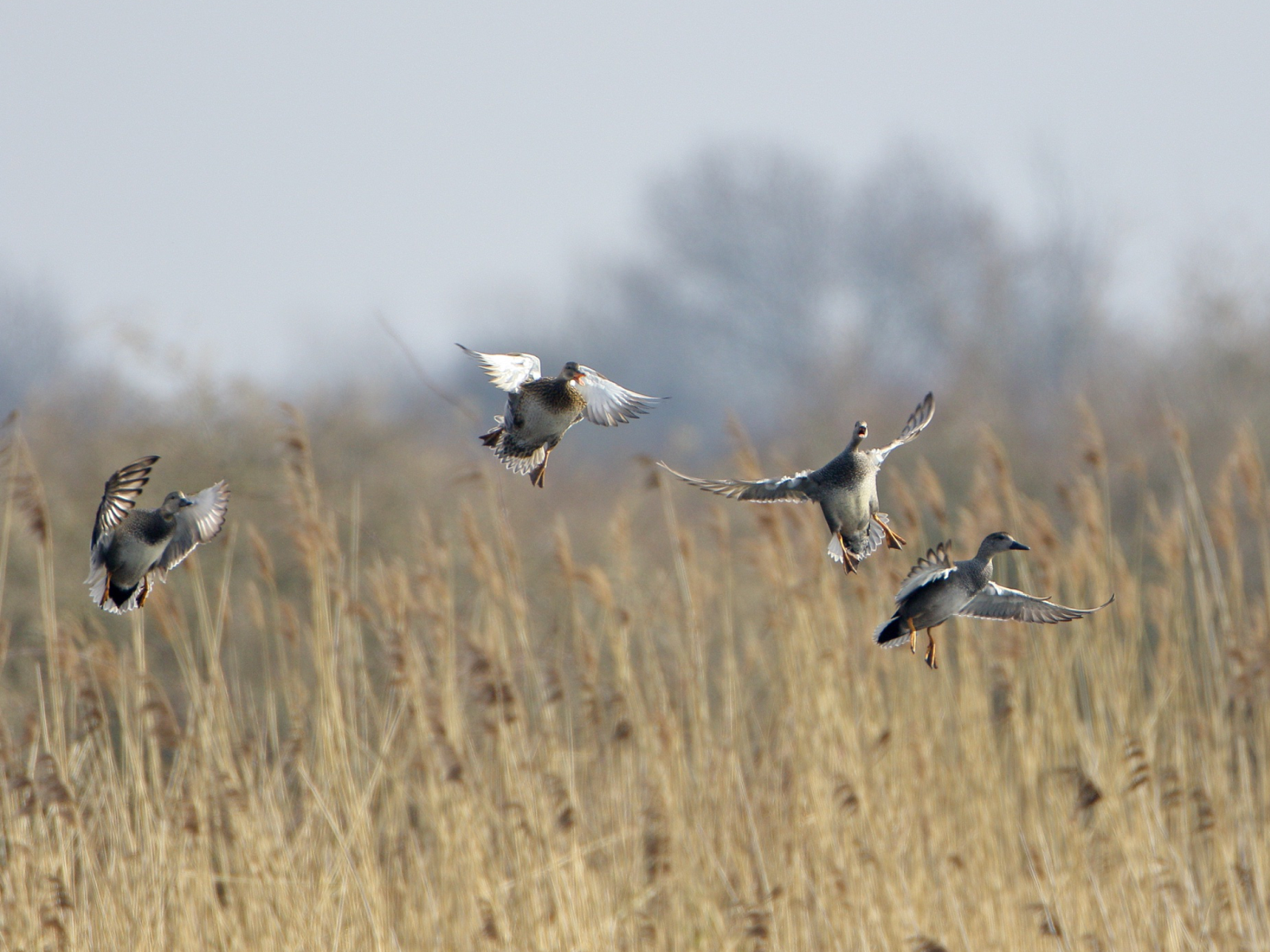
Garganey are still with us although very elusive, they obliged by putting in an
appearance when the Grebe was holding centre stage on Friday. Two Shelduck have
also been present on Ashgrave and occasionally out on Noke Sides
Shelduck (c) JR
The Grey Herons that are nesting in the reedbed
are putting on a great show in front of the first screen, but I am not sure
whether the nests out from the hide in the old gnarled oak tree are still being
occupied.
Grass Snake (c) JR
Both Grass Snakes and Common Lizards could be
seen taking advantage of the sunshine at the weekend. The Snakes basking on the
flattened reeds beside the bridleway and the Lizards on the logs and tiles by
the first screen.
Finally, there have been a couple of Rabbits
spotted by the first screen and I saw one myself in the carpark a week or so
ago. They are very unusual to find so far down the hill and on the wetter
ground. If you live in a burrow a floodplain is not a very safe place to set up
home!
Vociferous wren (c) JR
Avocets on Big Otmoor courtesy of Badger please view at 720p.
April is one of the very best months for birding and it has certainly
started off well on the moor. The weather both days was excellent, mostly sunny,
with a gentle southerly breeze helping to bring in a steady flow of migrants,
providing fresh additions for the year list.
Two chiffies top (c) JR bottom (c) Derek Lane
Getting out of the car on Saturday morning I was greeted by a Blackcap
singing loudly from the top of one of the willows. a couple of Willow Warblers
were calling from the Roman road area and Chiffchaffs seemed to be everywhere
both vocal and silent. In addition Cetti’s would seem to have survived the
winter successfully, we heard at least five individuals calling along the length
of the bridleway, out at the screens and one individual from the reedbed. It
really is really amazing how quickly they have come back from their very local
extinction, just three years ago.
Near drowning Shovellers(c) JR
Tufties after a female (c) JR
Frantic courting, nest building and mating is going on everywhere. Some of
the duck species are particularly rough in their mating behaviours and it is a
wonder that more females are not drowned in the procreative process. Single
females are often pursued by noisy bachelor parties of potential suitors.
Bachelor party in hot pursuit (c) Derek Lane
In
contrast a pair of mute swans mating in front of the second screen on Sunday
were perfectly graceful and sinuous, their post coital neck entwining was
positively balletic. Perfect inspiration for Swan Lake choreographers.
Out on Big Otmoor, the Closes and Greenaways the first Lapwing nests have
been found. Numbers at this stage are looking very positive. Redshanks are
almost everywhere, calling chasing and displaying, when they land raising their
wings like white banners to proclaim their arrival.
Redshank (c) JR
Some interesting birds were seen last week. A fly through male Hen Harrier
was very notable and a Tree sparrow on the feeders midweek was a very welcome
find. We are very hopeful that our feeding programme and the sowing of both
grain and wildflowers along the southern edges of the Closes will help to entice
this one time resident back.
Marsh Harrier (c) JR
Marsh Harriers are ever present with four seen on both days this weekend. A
couple of Peregrines are showing up frequently one of which spends quite some
time sitting out on a post on Greenaways. It is a large juvenile female by the
look of it, the other is clearly much smaller and almost certainly male. There
is still one Short Eared Owl on the moor it was seen on Sunday being harassed by
a Carrion Crow, as usual it flew higher and higher until the corvid lost
interest, it then descended onto the far side of the moor. There is also a Barn
Owl showing both morning and evening in the car park field and along the
bridleway.
Heron under pressure from Harrier (c) Tezzer
and Kites (c) Tezzer
Snipe are drumming and are venturing over The Closes as well as their
regular flight path above Greenaways. On Sunday we had one flying and “chipping”
at the same time as it descended, something we hadn’t observed before. We had
thought that it was a sound that they only made from the ground. A Greenshank
seen flying from the Closes onto Greenaways was another new bird for the year as
were a number of Swallows, we have still to record House Martins on Otmoor this
year. Two fine male Wheatears were seen on Saturday one out on Noke sides the
other on Big Otmoor. A Yellow Wagtail was seen later on Sunday coinciding with
their arrival at other sites in the county. We have noticed Tree Creepers in a
couple of places around the reserve. They are probably under recorded as they
are so secretive and quiet they often go unnoticed.
Tree Creepers (c) JR
Hares too are getting amorous and with one particular thing in mind they
can lose their inhibitions about how near to people they will go!
Haring hare (c) Francis Josephs
On both days this weekend Grass Snakes could be found lying out in the sun
on the flattened reed stems beside the bridle way. It is perfectly sheltered
there and allows them to get their metabolism up and running.
Grass Snake (c) JR
Over the next week more new migrants will arrive and the dawn chorus will
get louder and gain new voices.